
On Radical Belonging
“We belong to the ground
It is our power and we must stay
Close to it or maybe
We will get lost”
Narritjin Maymuru
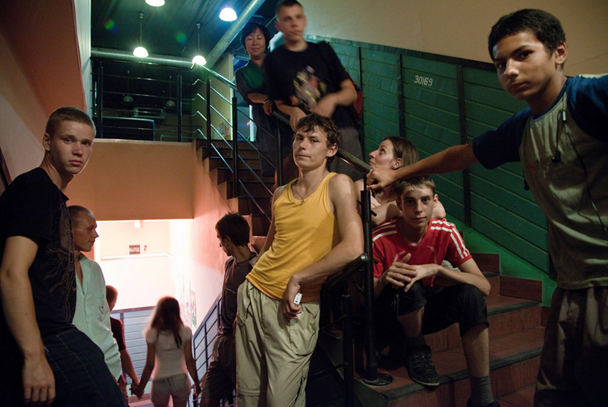
Photo by Dmitriy Markov, Instagram: @dcim.ru
When there is no safety left, with poverty, war, or tyranny, belonging becomes more valuable than morality and even survival. People turn to violence and/or obedience not because they are "cruel by nature" but because belonging becomes the last possible form for protection.
To be alone is to be exposed – if something happens, there is no group behind us, no witnesses, and no protection.
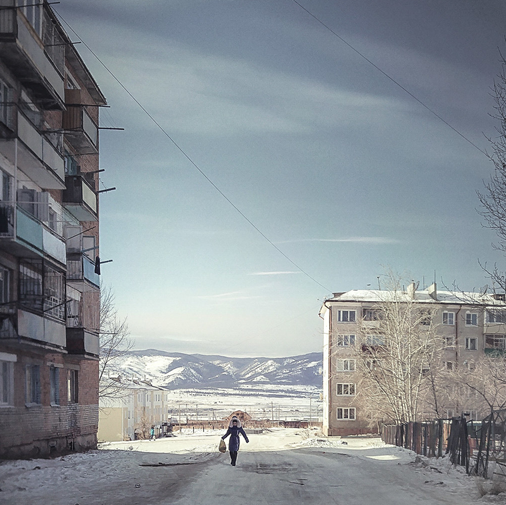
Photo by Dmitriy Markov
In “Crowds and Power”, Elias Canetti writes that open crowds, by their nature, want to consist of more people, as the urge to grow is the key attribute of the crowd. Open crowds “do not recognize houses, doors or locks”. At the same time, the openness that helps the crowd spread is also its danger — the crowd remains together as long as it continues to grow. We can draw a parallel between society (village or city) being an open crowd when the environment is safe.
The closed crowd is different, as it is built around permanence. Canetti writes that closed crowds have boundaries and establish themselves by accepting their limitation, gaining stability in exchange for openness.
Equality in the crowd, as Jodi Dean writes in “Crowds and Party”, is de-differentiation, de-individuation: “The stronger the common goal, the weaker the individual goals that might threaten the crowd’s density”. In this sense, direction or rules do not only come from a leader, but also emerge from the crowd itself, as common cause starts to subordinate individual preferences.
What changes is what kind of crowd it becomes. Belonging to the closed crowd replaces safety when safety is gone.
Complying with it, not falling out of it are the protection actions. Violence and/or obedience stop being moral questions and become adaptive behaviors, as they become ways to stay inside.
Terror Management Theory says that when people are exposed to chaos and instability, they cling more strongly to their group and to the group’s norms. Difference becomes dangerous. As Michel Foucault writes, not being like everybody else, not being normal, and being seen as sick are often collapsed into the same thing. “The judges of normality are present everywhere. We are in the society of the teacher-judge, the doctor-judge, the educator-judge, the social worker-judge; it is on them that the universal reign of the normative is based.”
In unsafe circumstances, especially in rural areas and small societies, belonging becomes extreme. There is less of a “buffer,” less anonymity, as everyone is seen, and “Visibility is a trap” (Foucault). Violence there is direct: everyday fights of drunk people, families next door beat each other, honor-based violence happens between former classmates. Animals someone sees growing up are killed for food – not packaged, not abstracted, but right there. Violence is part of everyday life.
In cities, cruelty is mostly delegated and far away – on the internet, within words, but also through police and prisons. Real blood and screaming are hidden. Responsibility is outsourced.
Rousseau (and Tolstoy, and all other village lovers), of course, would hate how dark this sounds. He romanticizes the small community as if it were a cleaner place – closer to “nature,” less shaped by status games, less toxic and corrupted than the city. For Rousseau, the city produces competition, comparison, and all the subtle forms of cruelty. The village becomes the place where people can still be “real”, where belonging is “warm”. Of course, that idea was historically powerful, maybe even necessary, because it made the rural population visible as something more than labor. But it’s also such a fantasy. The intimacy that Rousseau celebrates (everyone knows everyone) is also what makes the difference dangerous. In small places, belonging is a law. And once safety becomes thin, “community” stops being a dream and becomes a discipline machine. Deviation is seen as a threat to the group itself. Order is what keeps people protected.
In these conditions, obedience starts to look like duty, or even honor. A clear example is families that are voluntarily sending their sons to war. Obedience to belong is replacing love. From the outside, it looks like ideology or propaganda that work extremely well. Not only that. Refusing to send a son means getting shame and suspicion from peers. Families fear their sons’ social death more than their physical death. And sacrifice becomes the way to remain inside the group, even if it destroys what they love most.
This logic also goes through Coetzee’s "Disgrace". Daughter of the main character, white woman Lucy is trying to continue living as a farmer in the post-apartheid South Africa. In the middle of the story, she is raped by young Black men. She could leave, she also could appeal to police or justice, but she decides to stay. Her decision is not about "forgiveness" but about belonging. By staying and not going to the police, she shows that she understands the new social order and submits to it. Her submission is a very painful survival strategy and an acknowledgment of who holds power. And because she understands her place, she is allowed to remain.
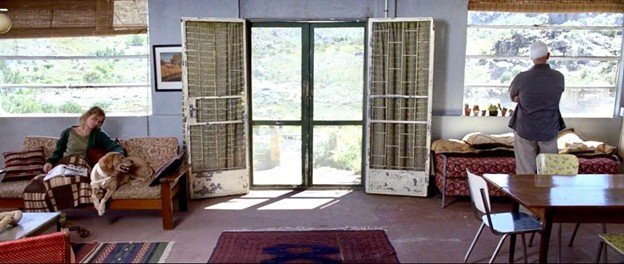
Disgrace (2008) - Australian film, based on J. M. Coetzee's 1999 novel
Some people prove they belong by hurting others. Others prove they belong by allowing themselves to be hurt. These are not sweet dreams.
When safety disappears, people stop asking what is right, because they are trying to find a way to exist.
And without safety, belonging is chosen at any cost.
-Margarita Sanginova
countercynic