
Spit Bite by Anastasia Sosunova at Kim? Contemporary Art Centre, Riga
Dates: August 15 – September 28, 2025
Place: Kim? Contemporary Art Centre, Riga
Text (English), Text (Latvian), Handout (English), Handout (Latvian)
Images courtesy of artists and Kim? Contemporary Art Centre, Riga. Photos by Ansis Starks.
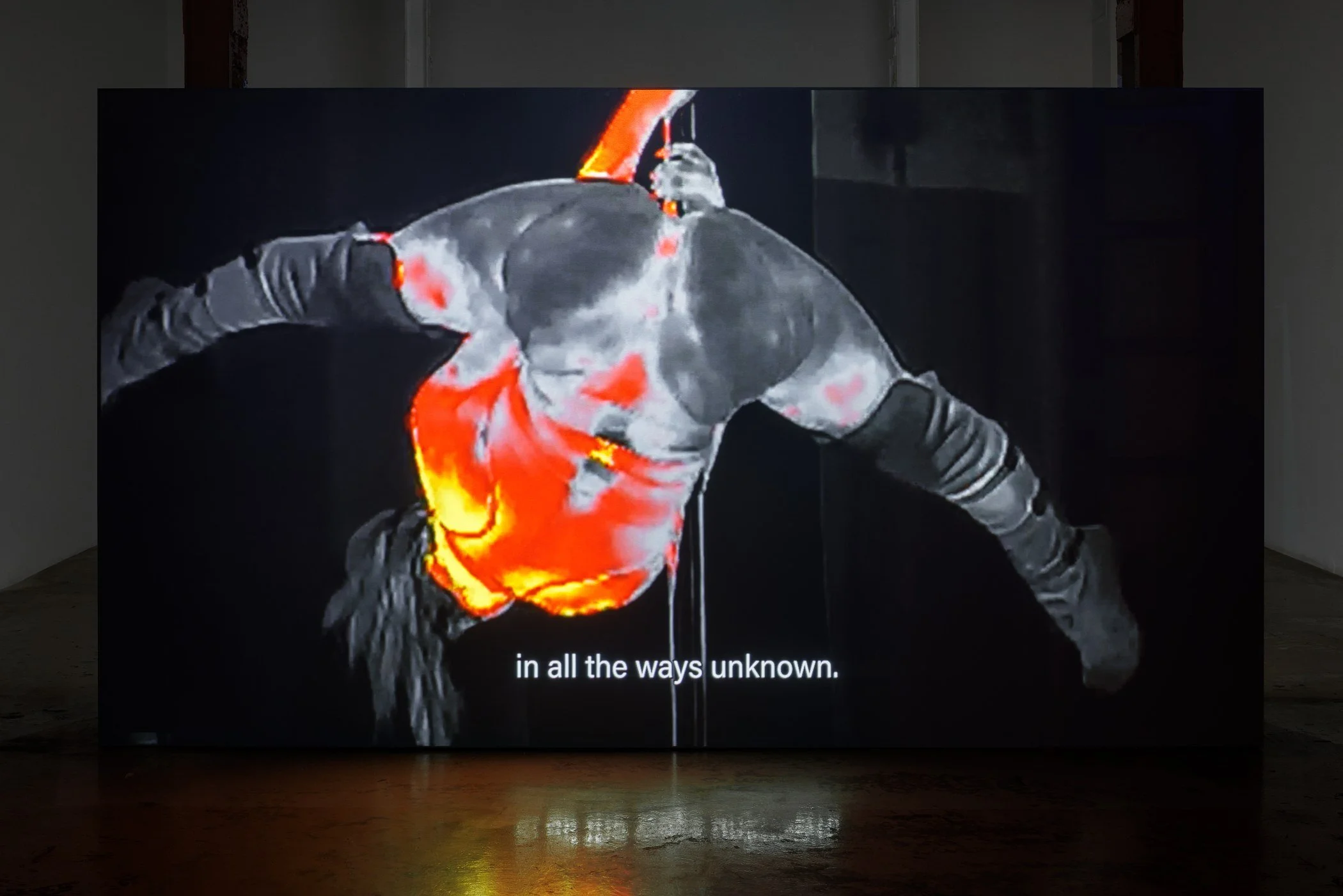
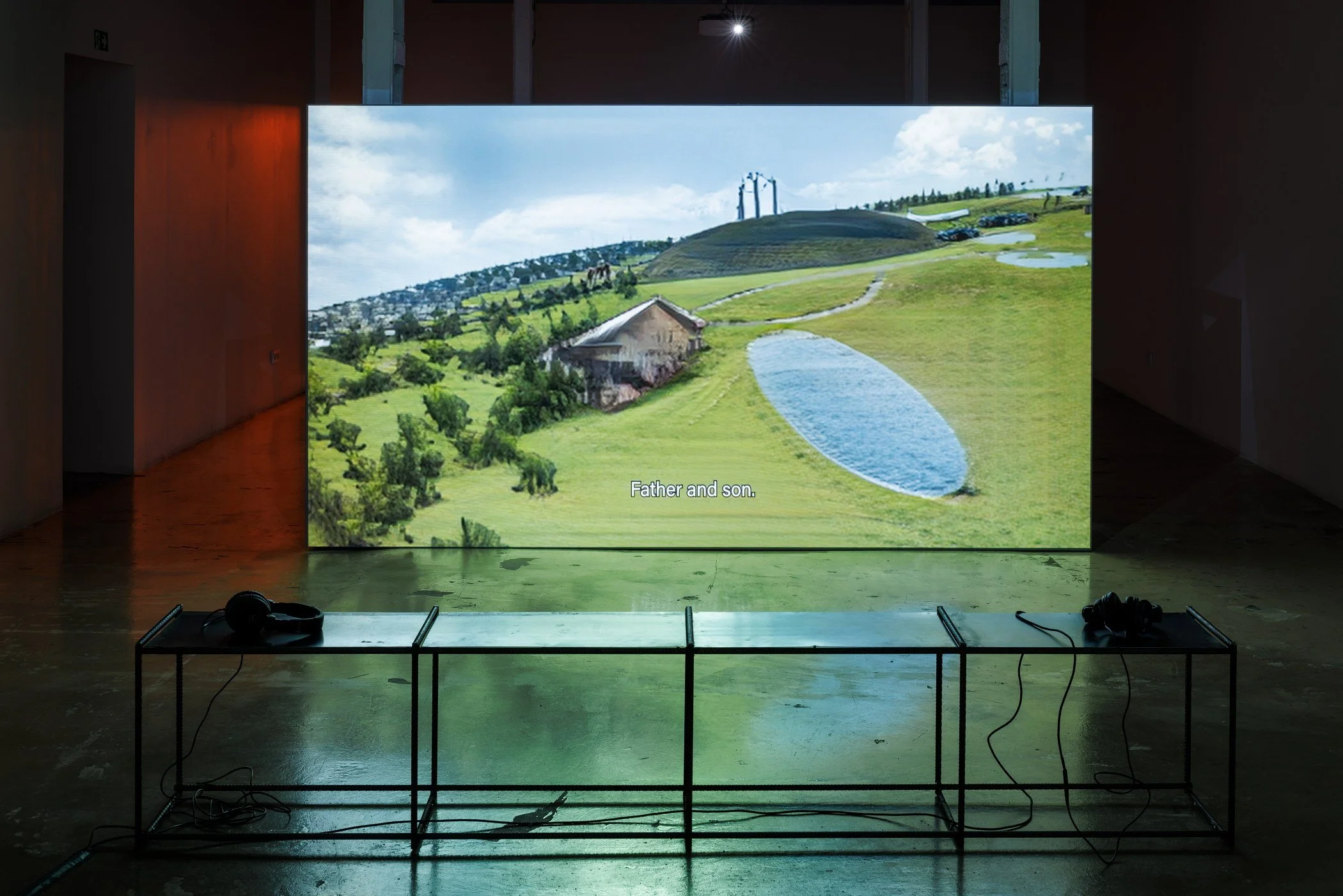
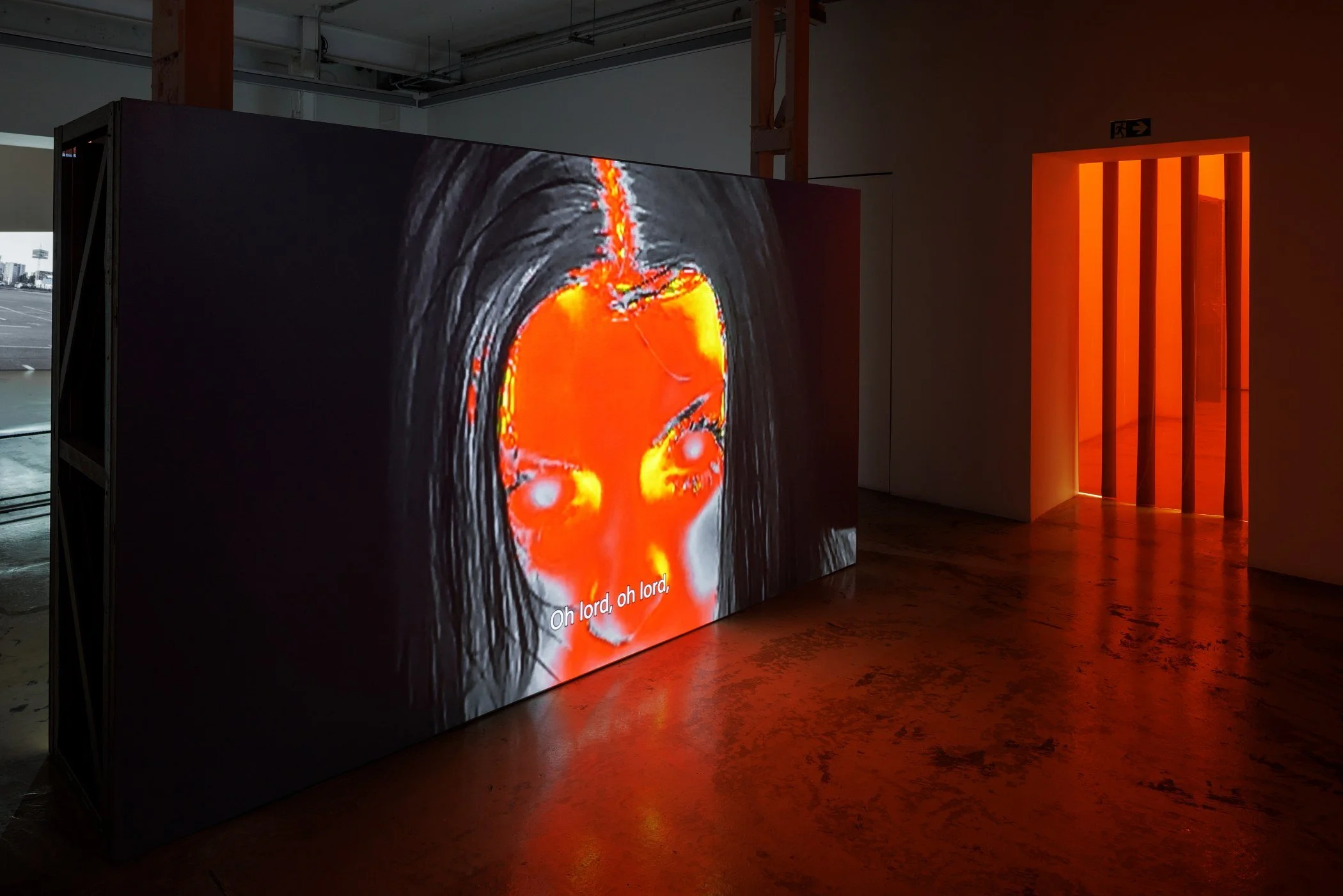
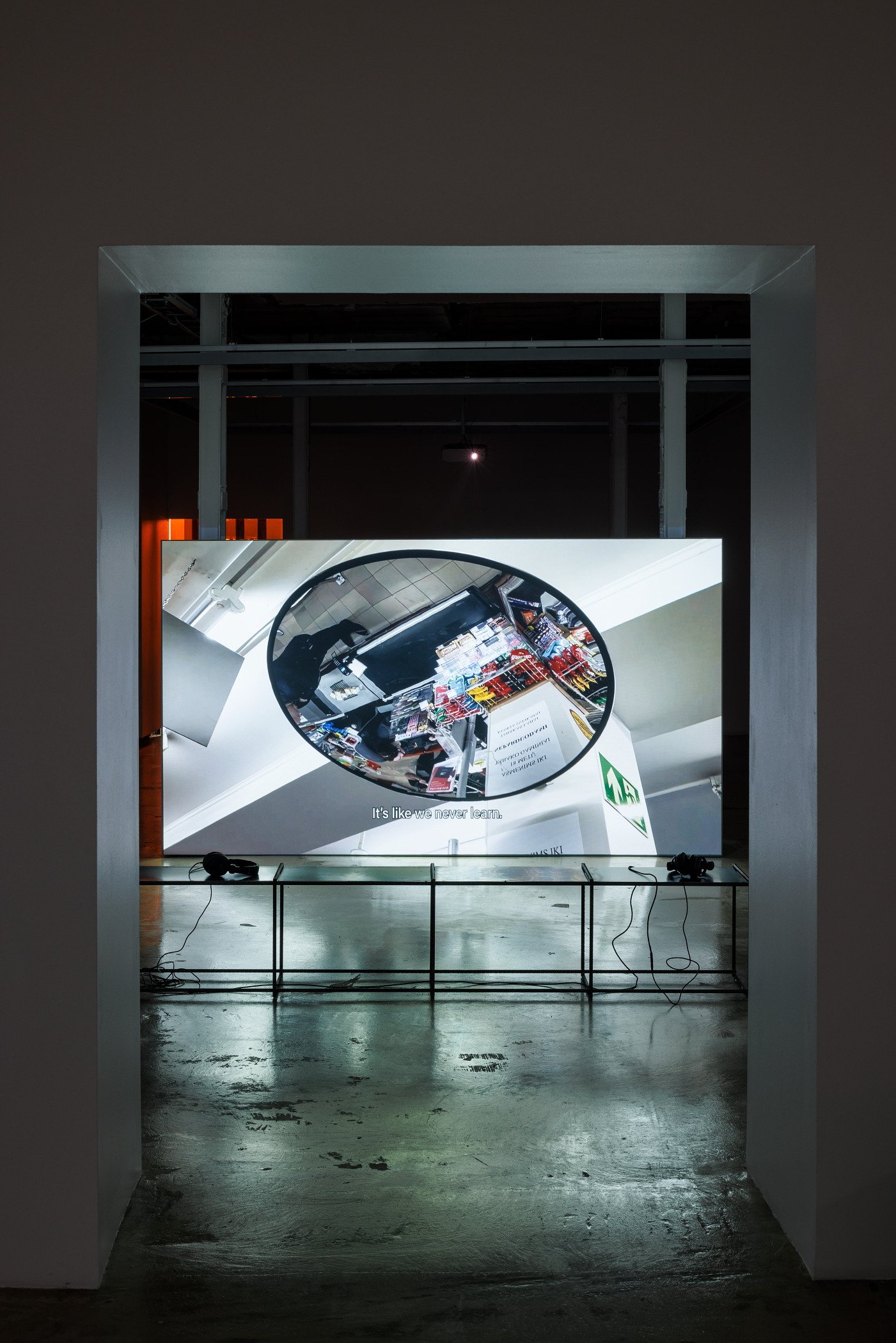
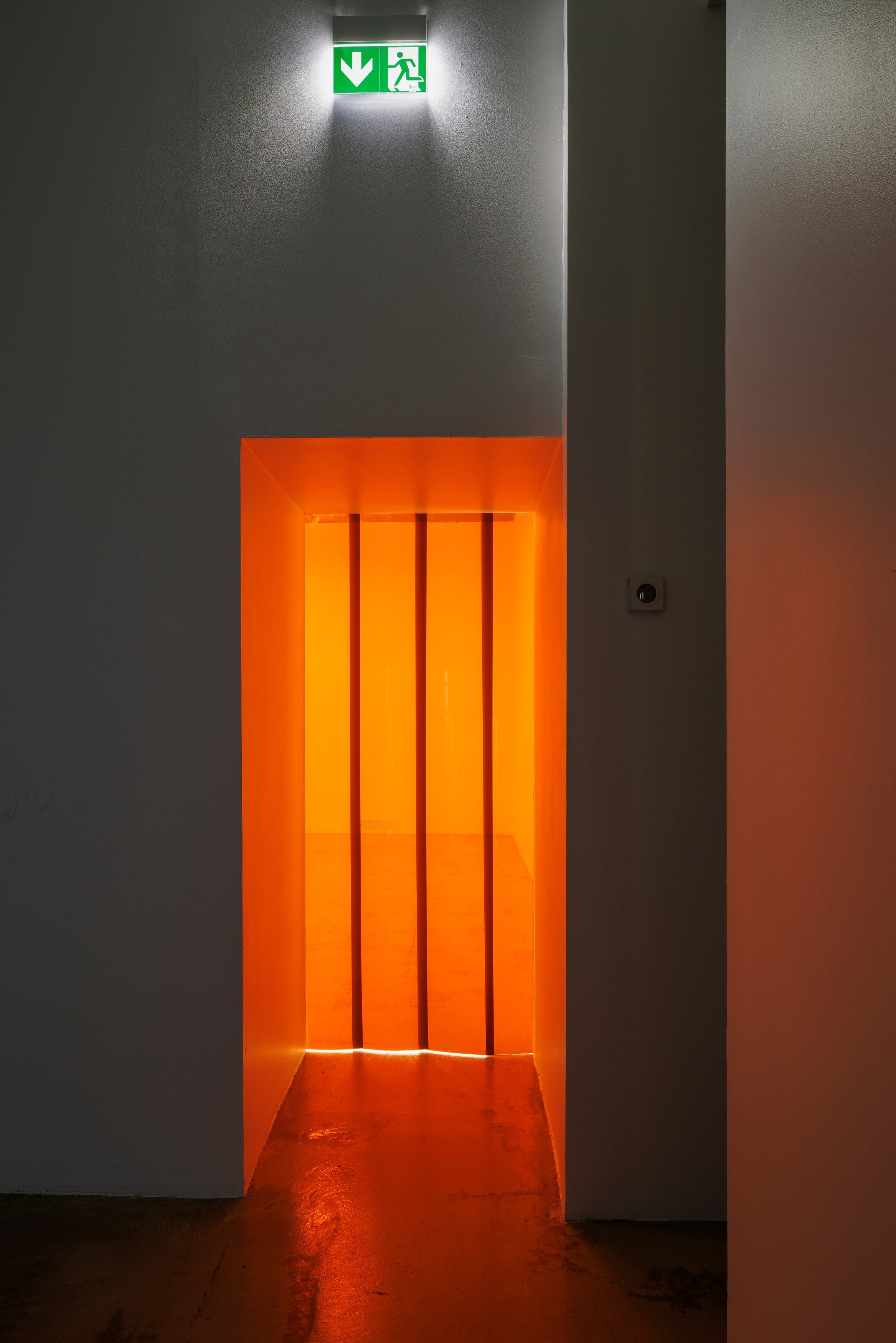
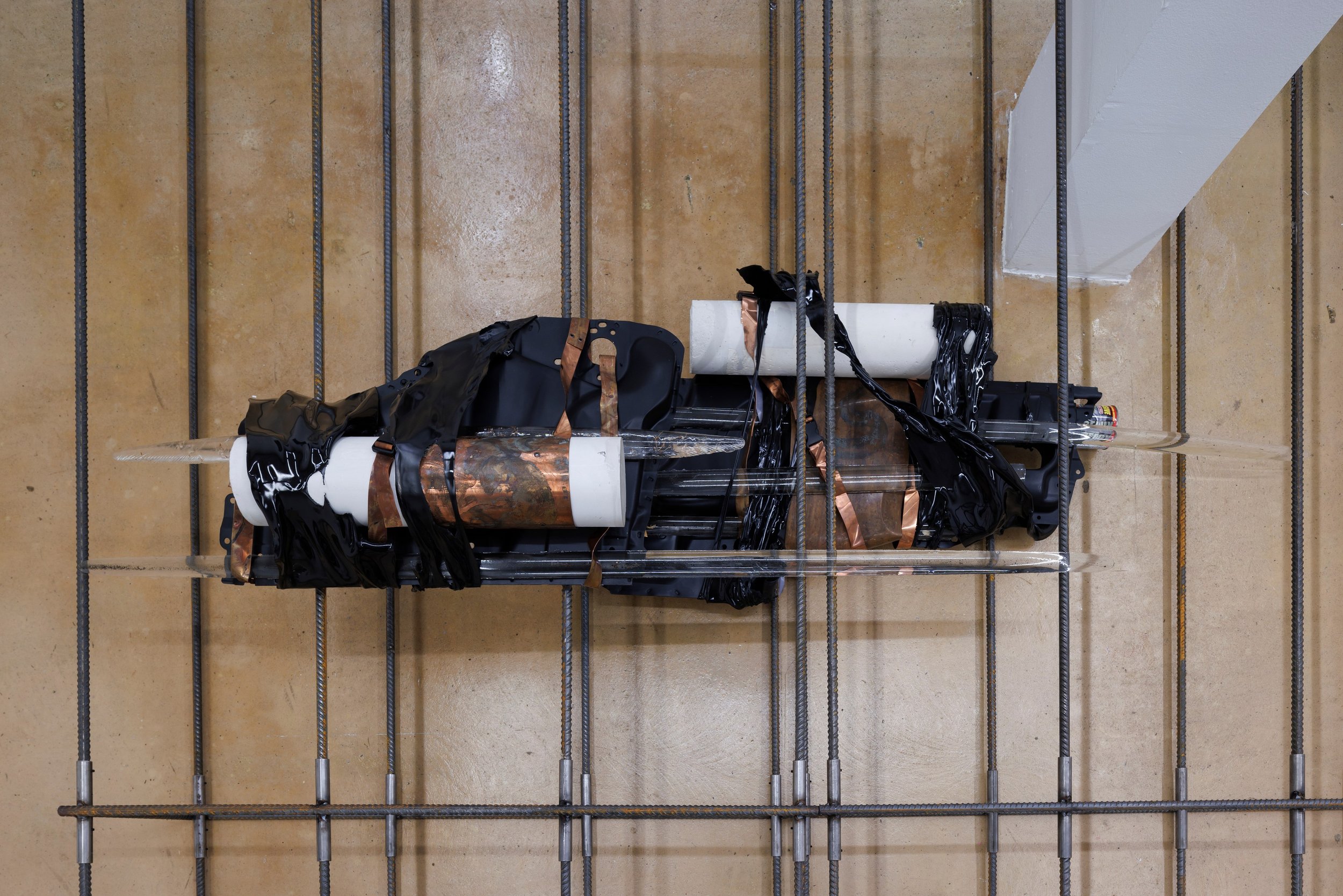
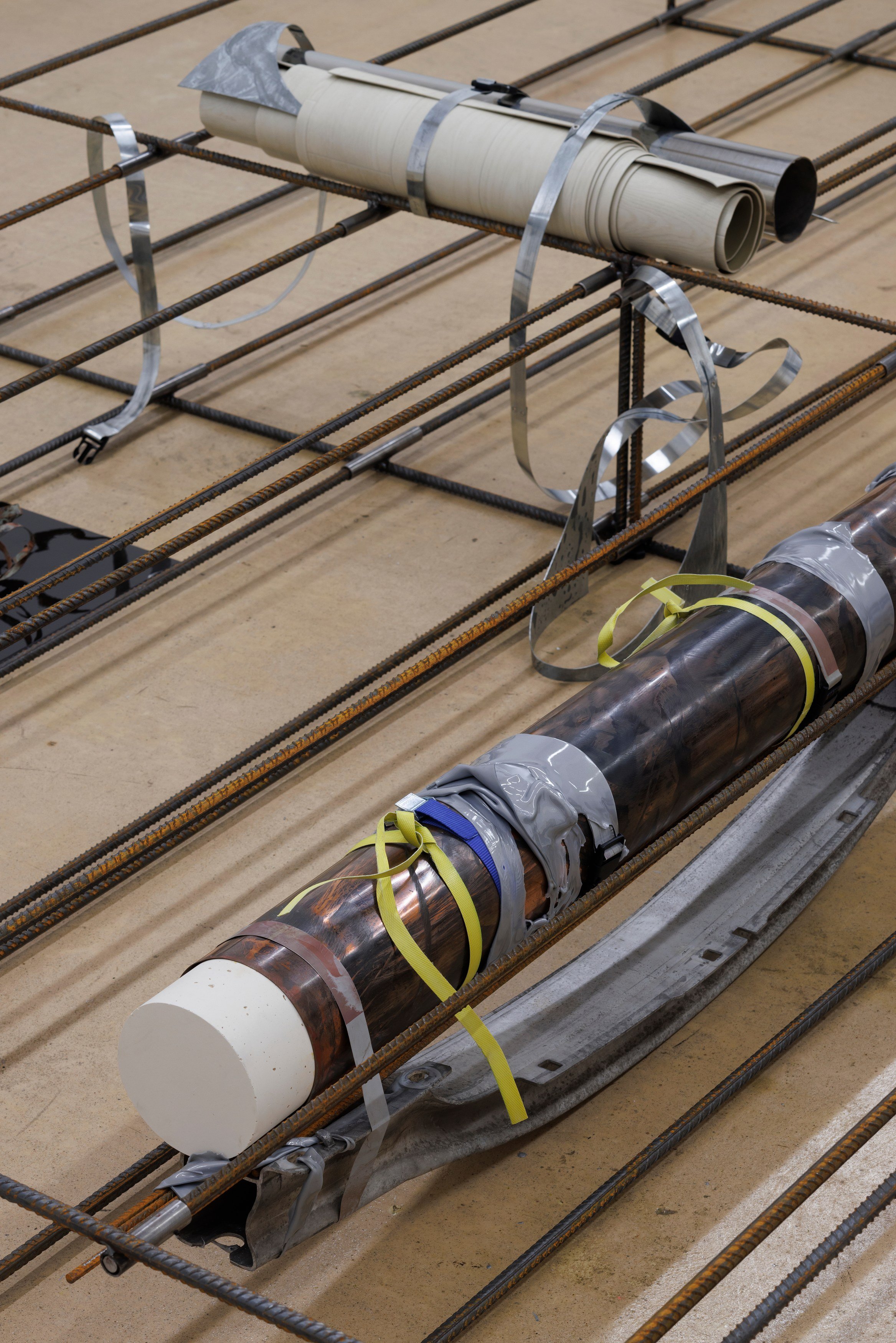
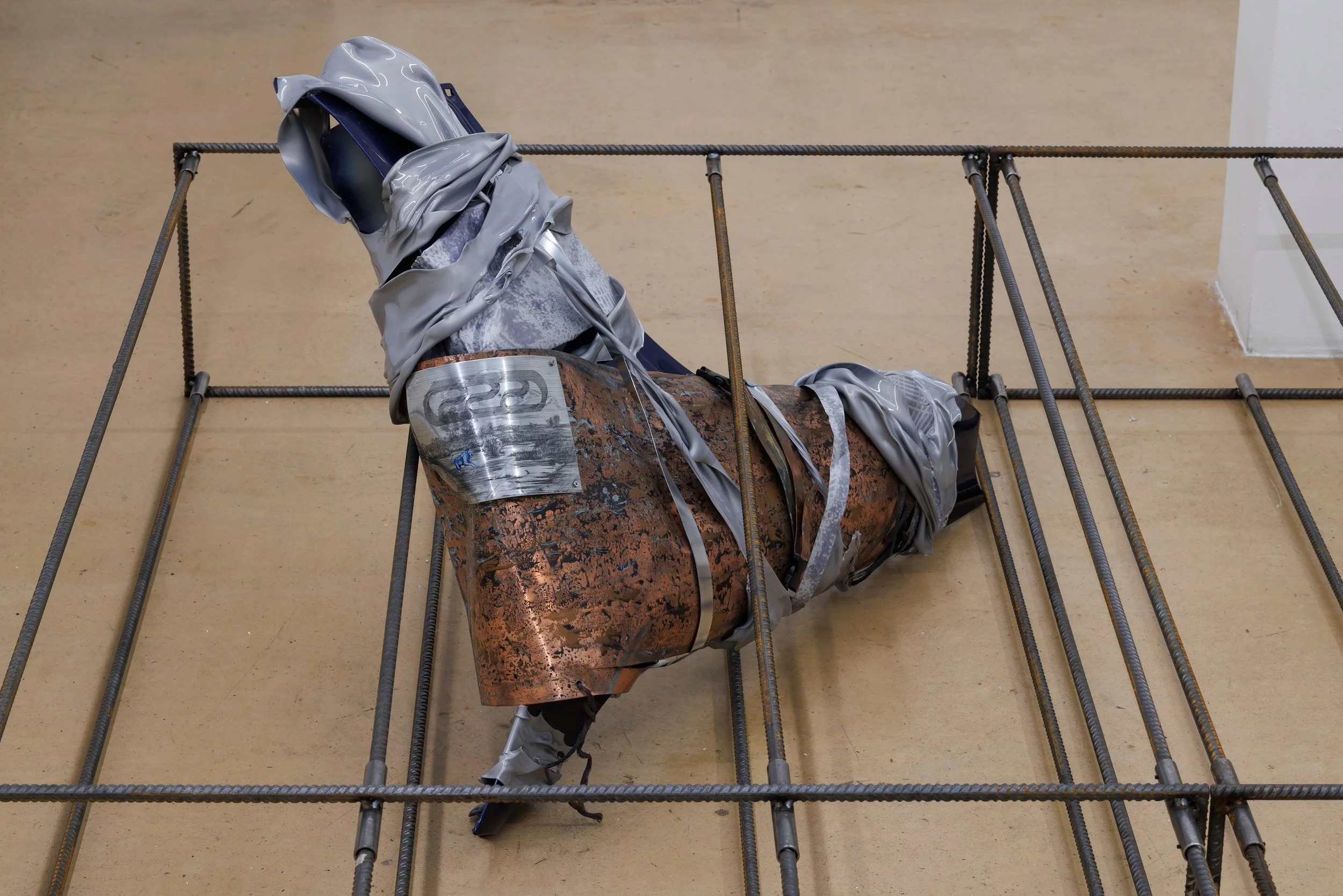
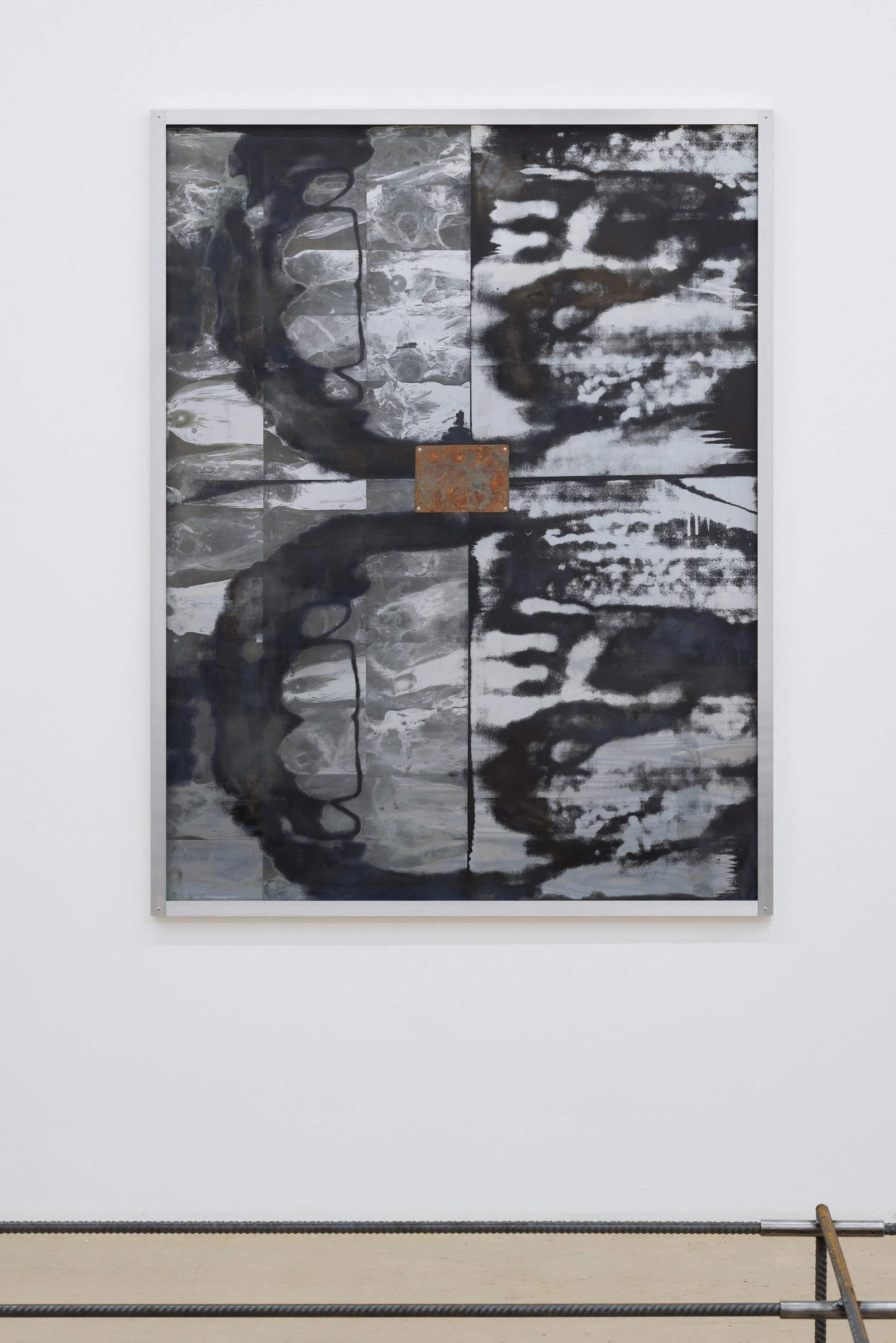
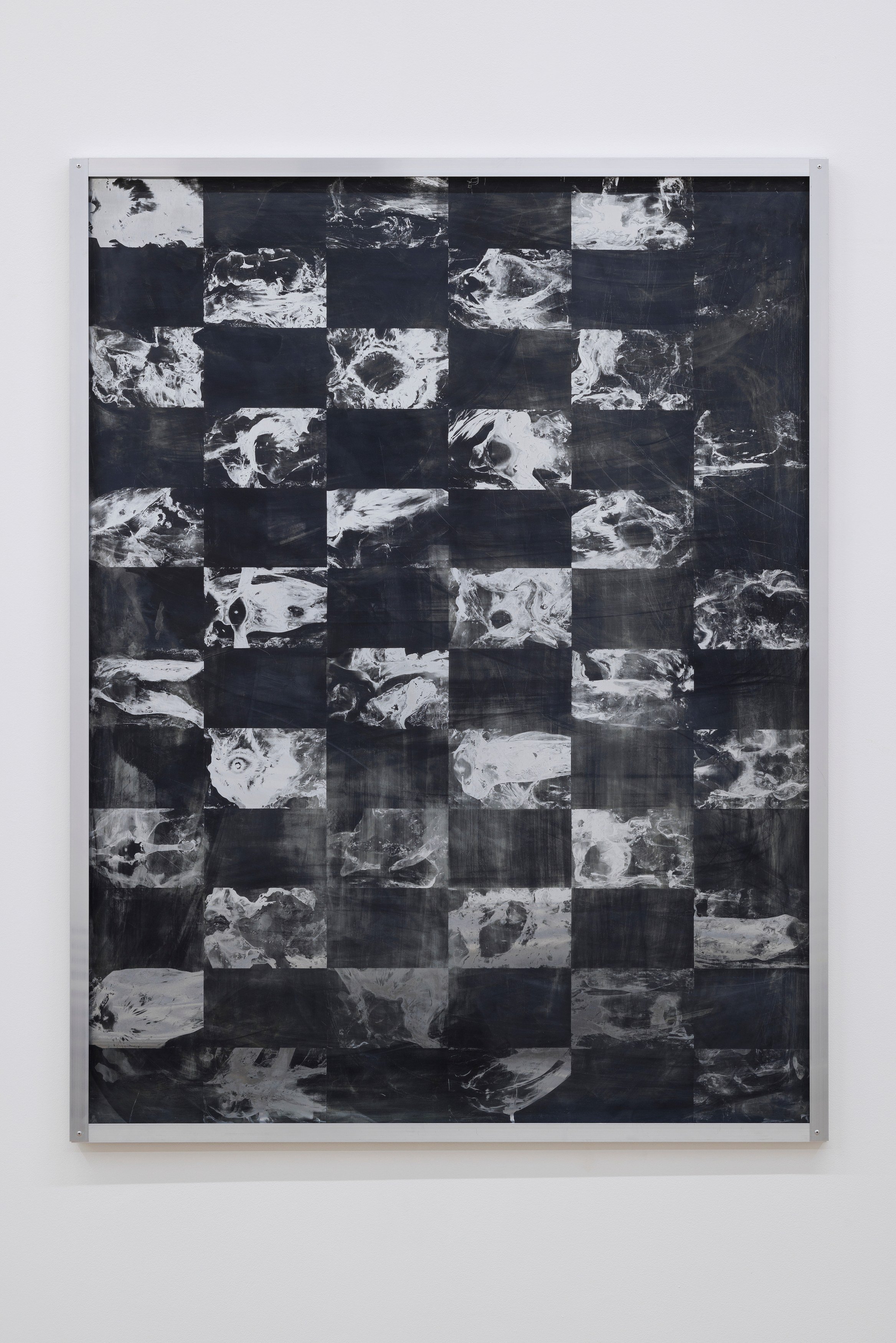
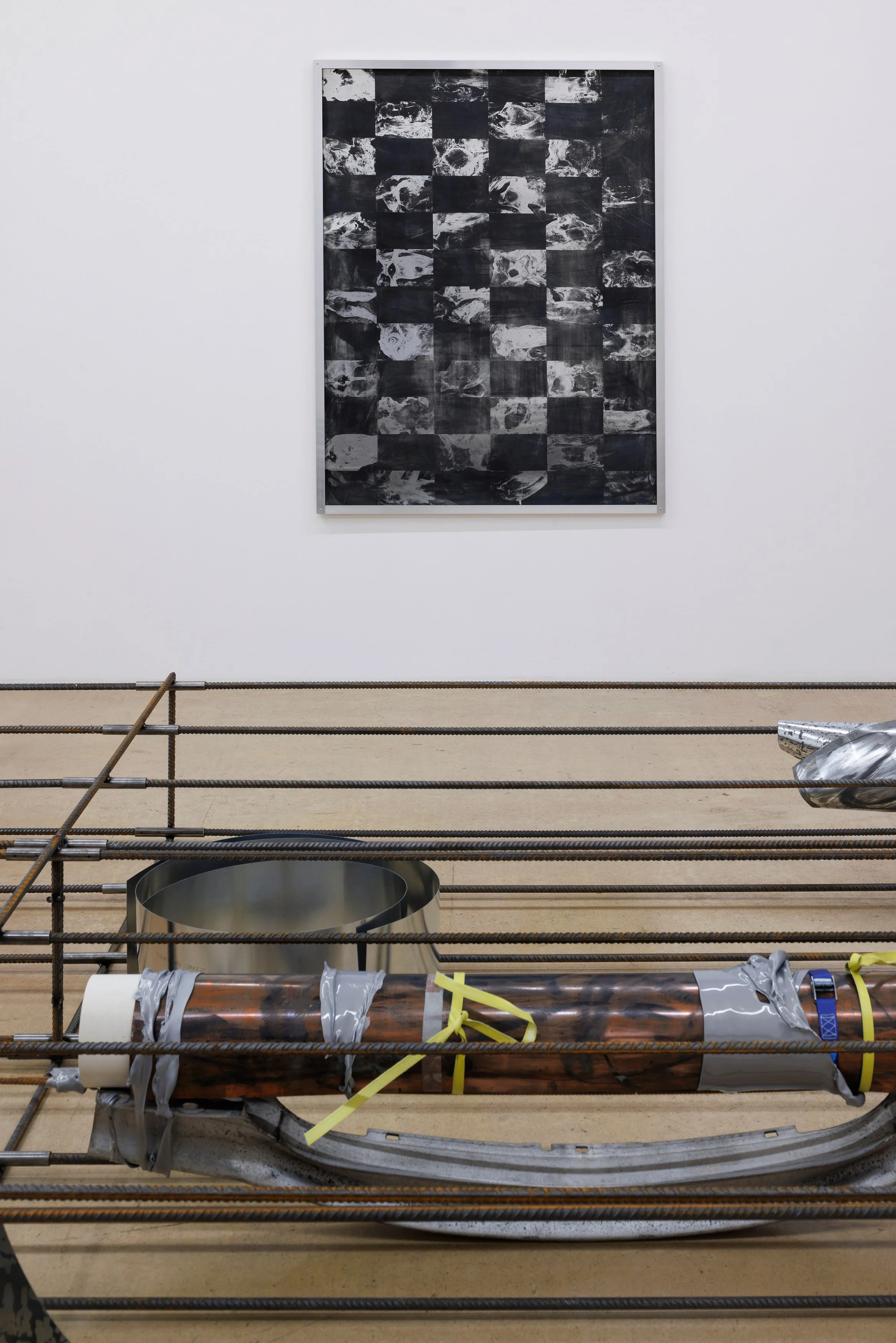
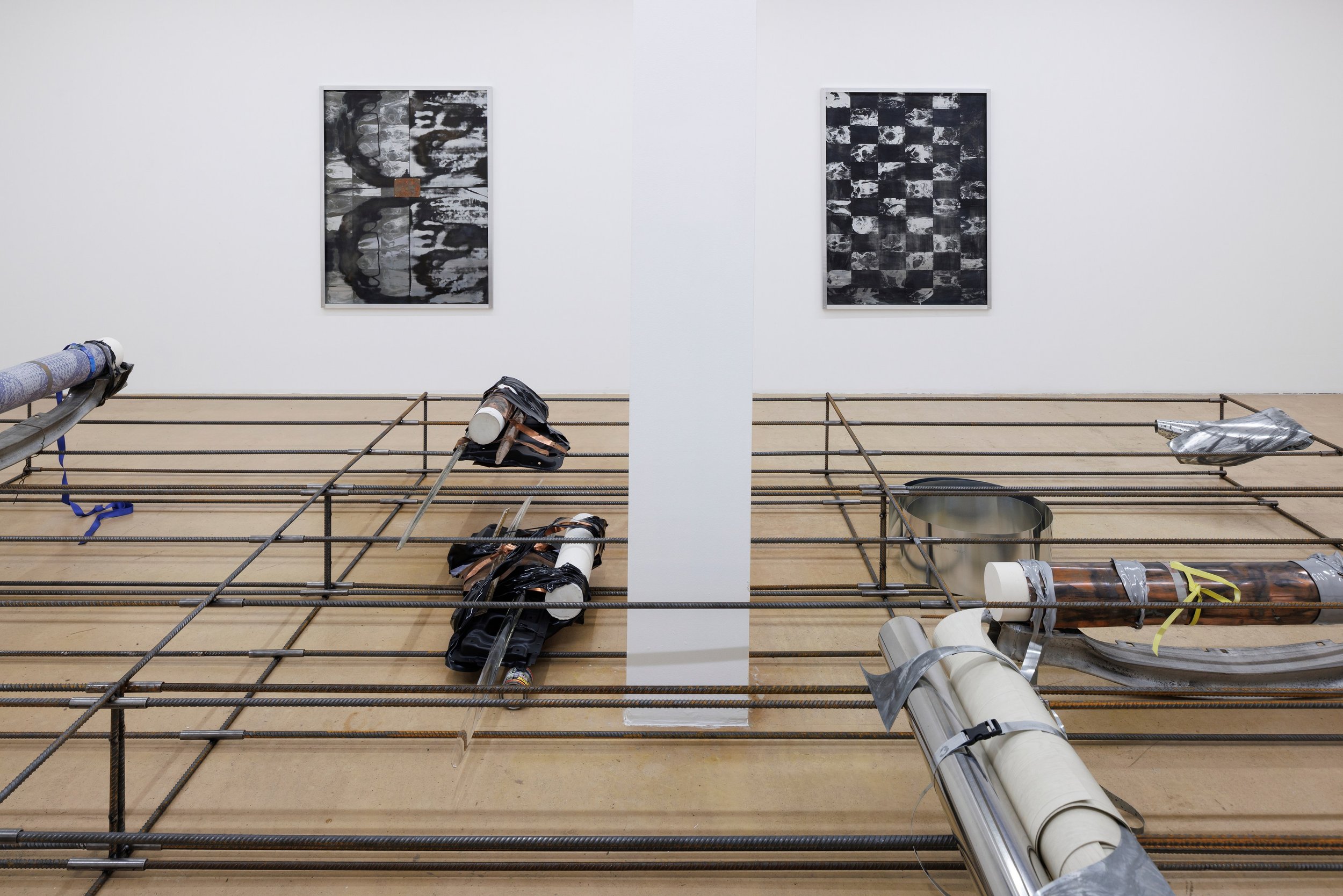
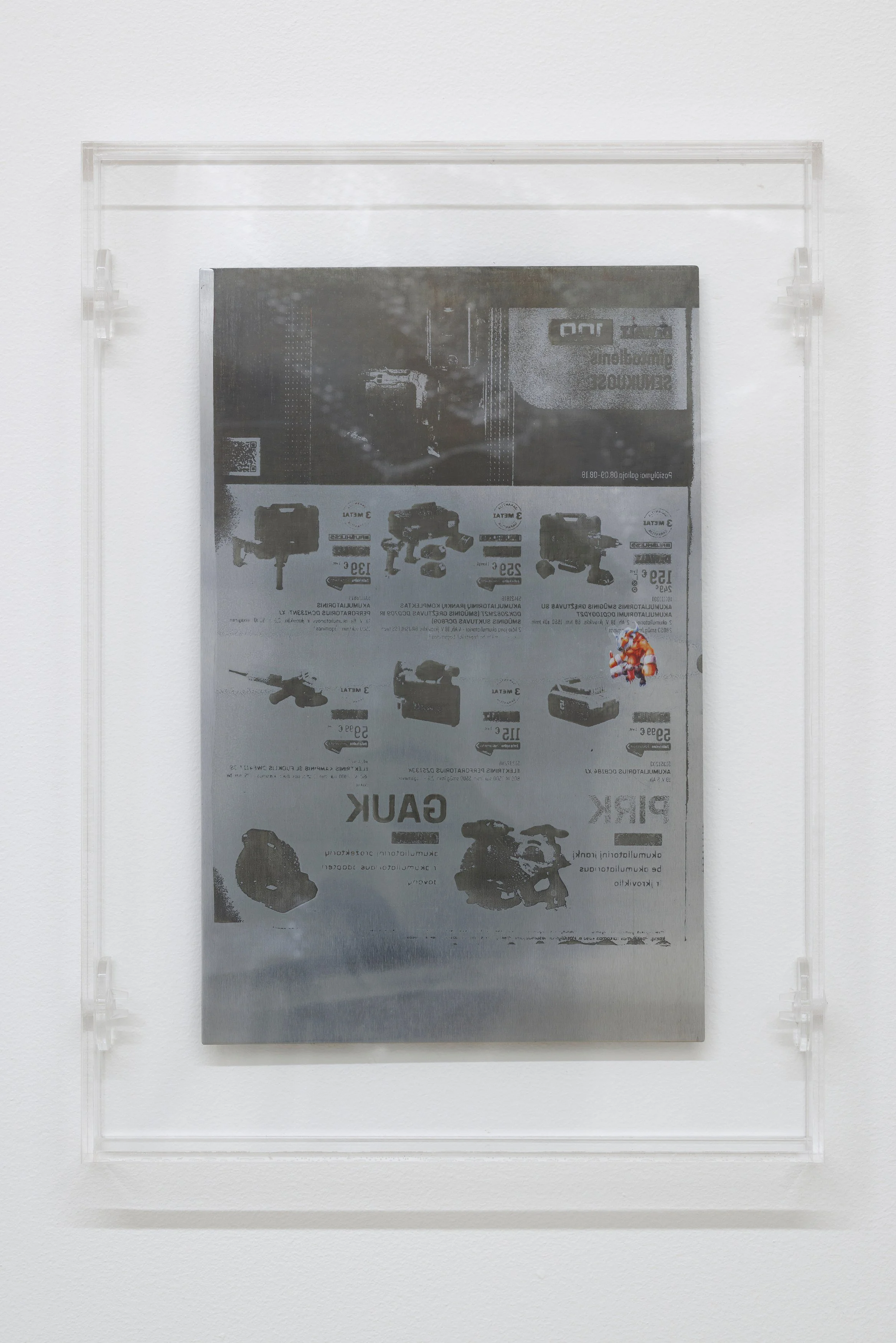
What does Anastasia Sosunova want us to see? For her solo exhibition “Spit Bite” at Kim?, the Lithuanian artist born post-independence (1993) gathers three distinct bodies of work: a series of three videos — shown together for the first time — which could form a trilogy of sorts [DIY (2023), Preyer (2024) and Xover (2025)]; a group of sculptures displayed through a grid-like structure made of rebars [Local Beasts (2024)]; as well as eight new works on metal plates. If their relationships might not come across as obvious at the outset, they are more incestuous than they appear.
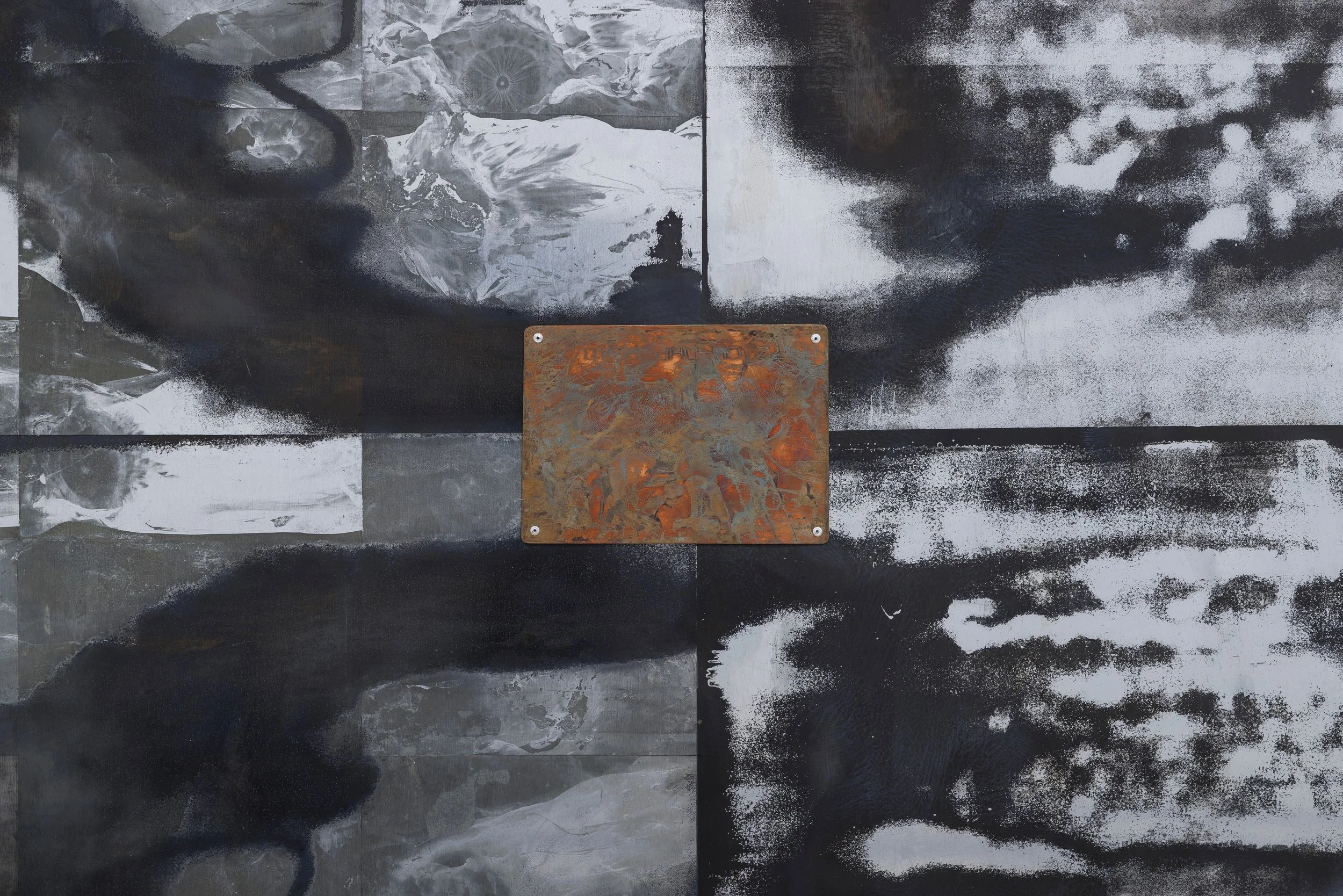
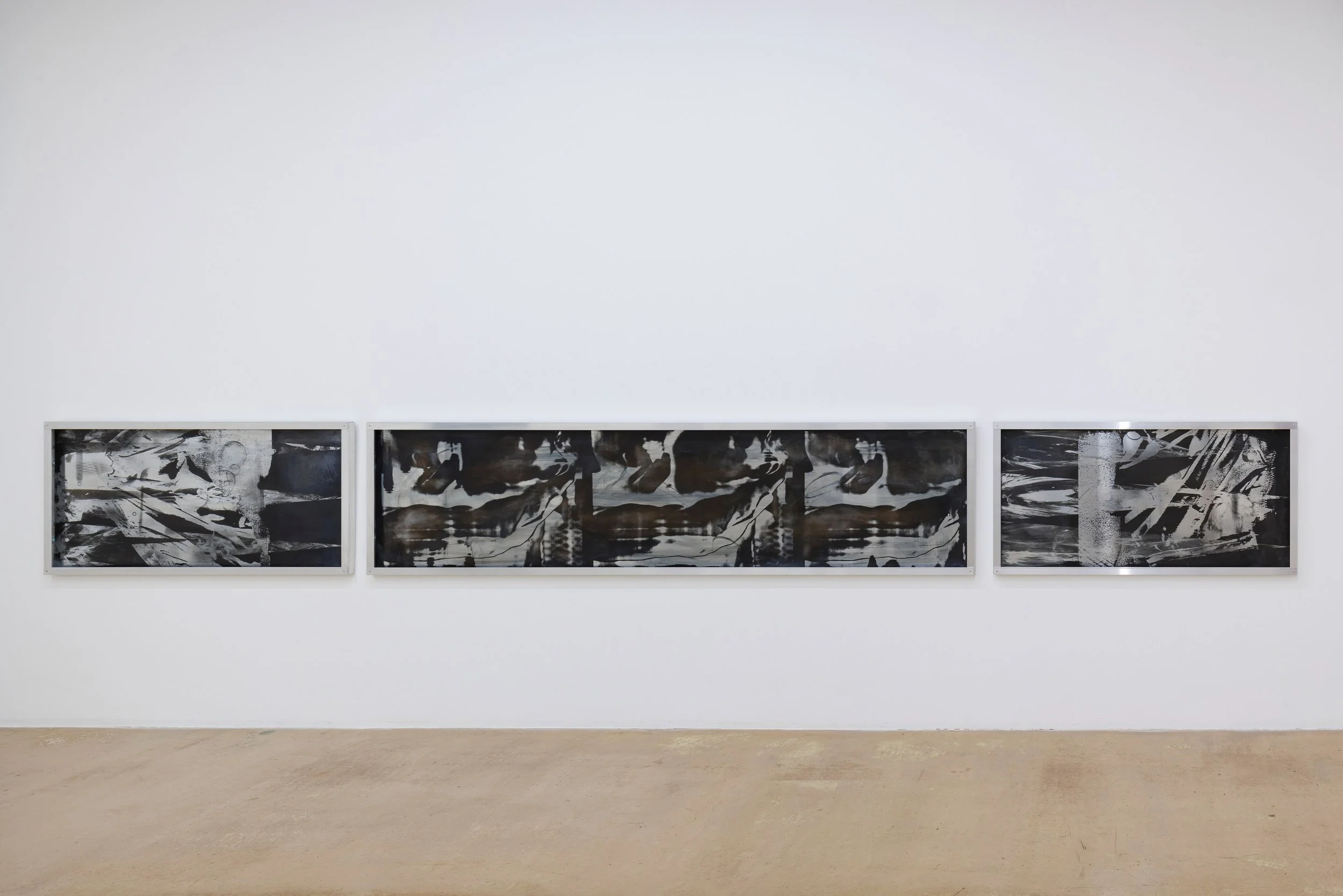
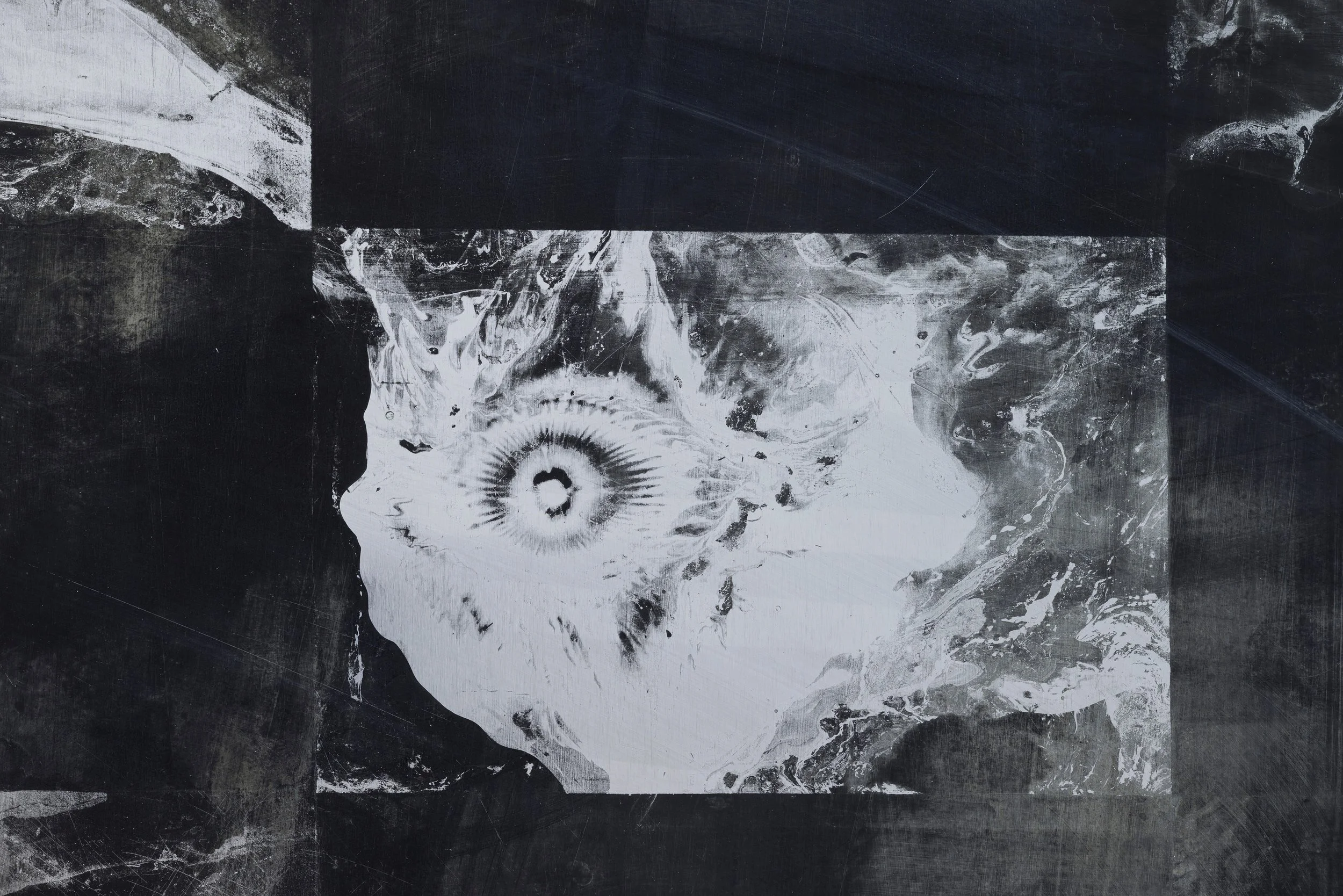
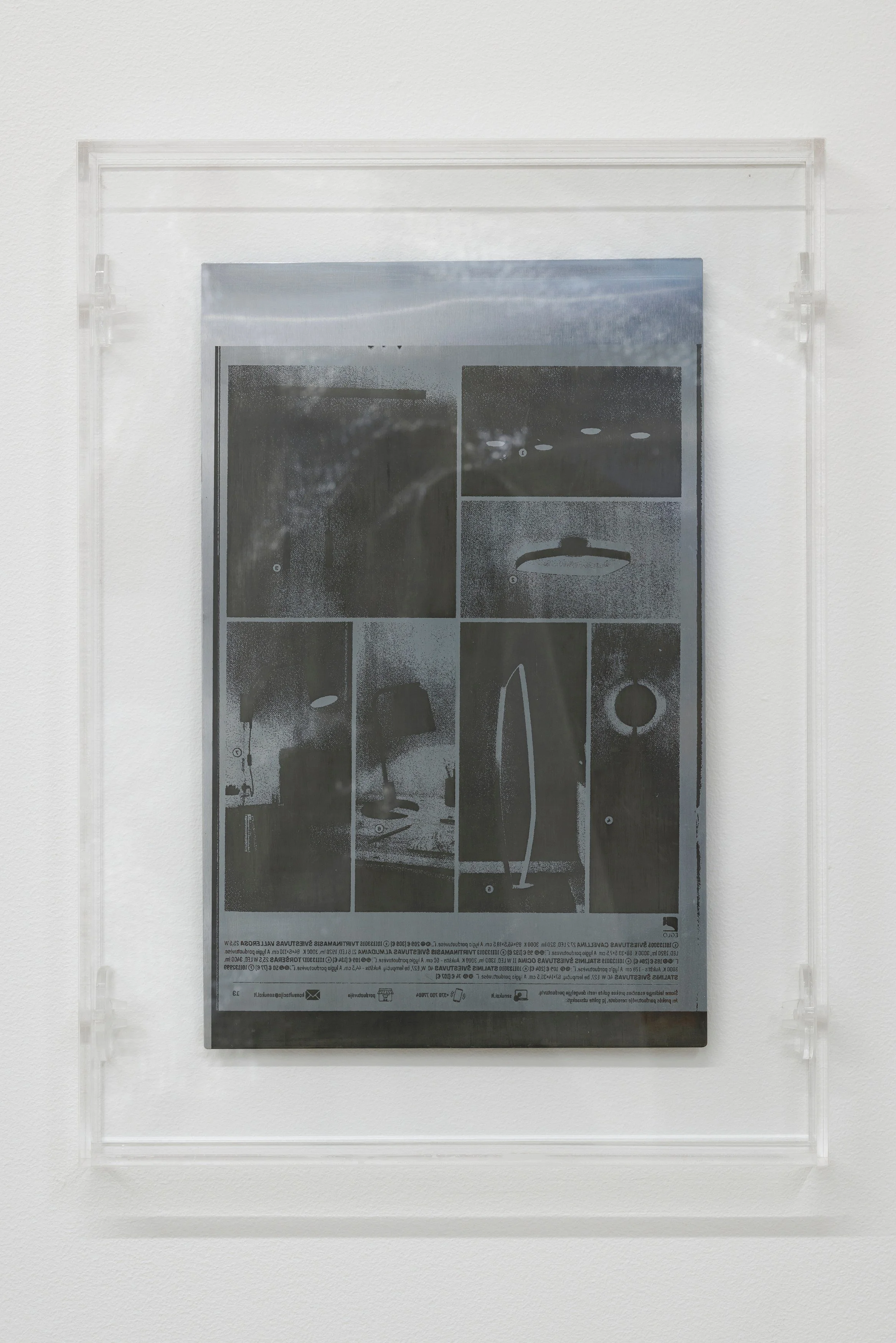
For once, some of the metal sheets — the largest ones — have been screen-printed with stills excerpted from footage and outtakes from the videos on view. Other sheets — the smaller pieces — present pages of catalogues from the Senukai retail chain (the subject matter or starting point of the videos). The same sheets hung on the walls (flat) are also treated sculpturally (rolled up) in Local Beasts, and animal motifs run through both. These echoes and easter eggs point towards the liquid state of signs, images, and what holds them.
As someone who initially studied printmaking before moving to sculpture, Sosunova developed an acute sensibility to how images circulate in the world, specifically through print. That initial training led her to master various techniques such as bath etching, which makes use of actual liquid — acid — to cut into metal plates. As an exhibition title, “Spit Bite” refers to a specific use of the said acid, not as a bath, but directly applied onto the metallic surface (for the works on view Sosunova used copper sulfate, nitric acid and ferric chloride on zinc and copper): it’s a name that already contains the liquid state of the image.
Liquidity is also value. The multiple numbers that can be found in the exhibition — whether on the etchings behind plexiglass cases or in the sculptures — refer to monetary value. More specifically, the Local Beasts pieces have been inspired by the animals chosen to appear on the banknotes of the talonas, a Lithuanian transitional currency meant to replace the Soviet ruble (1990–1993). As a newly independent country, Lithuania attempted to manifest its identity through local animal species: lizards, herons, martens, lynxes, moose and bisons. While some of the animals and notes have been etched on rolled-up metal plates, Sosunova has also incorporated plaster made out of toilet paper in the sculptures — tissue sourced from the company that took care of recycling the banknotes, allegedly turning them into toilet paper once decommissioned.
The state of the zinc and copper plates onto which existing images are screen-printed, etched and spat on with various acids is also liquid. First as metals, since they are meltable. Secondly because, as printing plates, they are both the source of the image without being the image, and thus discardable. That Sosunova plays with the very ambiguous state of the matrix—the technical printing term designating the plate — as a surface for display (here emphasised when placed behind a vitrine or framed) is not innocent. In doing so, she highlights the “origin of the image” and speaks to the history of image production and its circulation. The inclusion of ancient imagery such as Peter van der Brocht’s *Typus Praefecturae* (1578) also serves as a transhistorical portal, one that helps Sosunova write the history of the medium she uses “in its flesh.”
At last, the three video works included in the exhibition are manifestations of a long-term research project focusing on the Senukai-Empire founder and his precarious spiritual lessons hinged on individualism through DIY culture. Produced over the past three years, they belong to the same lore and sometimes employ the same editing effects or image types — most notably thermal imaging. If they seemingly share the same main character(s), it is the text that ultimately ties them together. Weaving material authored by the founder himself, testimony from former Senukai workers, poetry, and autobiographical accounts, the script is, in itself, a liquid collage. A score to mourn ideas we once held onto: from that of the nation state to the hope for a better future.
“I looked at the welding light the other day. Like a sunset, it burned my eyes,” whispers the voiceover in DIY. Anastasia Sosunova does not want us merely to look at her works; she wants us to see through them. In that respect, although very much grounded in materiality, her practice is primarily concerned with revealing the underbelly of image-making processes and unsettling cycles of image consumption. As such, the opening question — “What does Anastasia Sosunova want us to see?” — is flawed. It would be more accurate to ask: “How does Anastasia Sosunova want us to see?”
Cédric Fauq